Founded in 2005 by Gabriele Gilleri and Michele Del Bono, Different Grooves began as a platform born from a shared passion for underground electronic music and club culture. Emerging from the Alpe Adria region, the website grew from a grassroots project documenting local parties into an internationally recognised electronic music platform, featuring artist interviews, reviews, podcasts and mixes from leading names across the scene.
Over the years, the Different Grooves mix series became a defining part of the platform, hosting exclusive sets from influential artists including Luke Solomon, M.A.N.D.Y., Dave Angel, Simon Dunmore, DJ Hell and many more. Alongside its editorial coverage, the platform helped document and connect different corners of electronic music culture, building a respected archive that reflected the evolution of the underground scene.
As Different Grooves begins a new chapter as part of a new media group, the foundations laid by its original founders remain central to its identity. In this exclusive interview, Gabriele Gilleri and Michele Del Bono look back on the origins of Different Grooves, the challenges of building an independent electronic music publication before the rise of social media, and the people, experiences and values that shaped the platform over two decades.
Before launching Different Grooves, what were your individual backgrounds in electronic music or media, and how did those experiences lead into starting the website?
Gabriele Gilleri: My journey into electronic music started incredibly early. I experienced my first Sunday afternoon club at the age of 13, and by 15, I was already DJing at school parties. By 16, I was performing in proper venues, but the real turning point was our geographical location. Growing up in Trieste, a city with a deeply Central European (Mitteleuropäische) soul, and being right on the border with Slovenia, gave us a unique vantage point.
In the late 90s and early 2000s, the Alpe-Adria region and Northern Italy were home to an exceptionally vibrant, boundary-pushing club scene. This proximity allowed us to experience global techno legends firsthand and accelerated our growth as clubbers. We quickly realized that our local and international network of friends and peers needed a dedicated digital reference point. Driven by this multicultural background and a passion for the dancefloor, creating an internationally focused platform like Different Grooves felt like the natural next step.
Michele Del Bono: My first real contact with electronic music happened when I was seven or eight years old, in the mid-90s, and I’ve never quite been able to explain it. Among everything I was coming across at the time, the tracks built on that structure – the repetition, the machine pulse, the way something keeps rising and rising – were the only ones that genuinely lit me up. I just kept following the call of the beats, and I never really stopped.
By the time I was a teenager, I couldn’t wait for the day I’d be walking into a ‘discoteca’. When it finally happened, it was love at first sight: from that first Sunday afternoon, clubbing and nightlife became my lifestyle and my biggest passion for the years to come. It gave me a place to be.
Gabriele and I were going out together, listening to the same tunes and seeing the same lights, coming home with the same electricity in our heads, and at a certain point it simply felt natural to step from the crowd into the machinery, to become an active player instead of just consuming it.
The other half of the story is technology: I had my hands on a computer at three or four years old. I was fascinated by it, and above all by the visual side of it – how the bright coloured pixels looked, how a screen can be made to feel like something. So when Gabriele and I started imagining what our role in the scene could be, the web wasn’t a tool we chose. It was where our imagination already lived.
Different Grooves came out of those two passions (and obsessions?) the dancefloor and the screen, finally finding each other when recalling our moments on the dancefloor after each weekend. Twenty years later I make a living in the space between them, which is absolutely something I was only dreaming of back then.
Looking back to 2005, what was the original concept and reasoning for launching Different Grooves?
Gabriele Gilleri: The original concept is heavily reflected in the name itself: we wanted to explore “different grooves,” steering completely clear of the mainstream, commercial tracks that dominated the radio at the time. Our goal was twofold: we wanted to shine a spotlight on the incredible local talent brewing within the Alpe-Adria scene, while simultaneously connecting them with major European and global labels.
The spark that started it all was simply the deep friendship and shared passion I had with Michele. Right as we were on the cusp of turning 19, we made the bold decision to pool our small savings together to build the very first version of the website. We initially hired an external agency, but we quickly realized that to keep it authentic, we needed to learn the ropes and manage everything in-house, step by step. That hands-on process made us realize that Different Grooves couldn’t just stop at being a digital magazine; it was the launching pad for us to step up as promoters and start producing our own events, putting skin in the game.
Michele Del Bono: Honestly, I think we just had strong opinions, and a kind of energy we couldn’t contain.
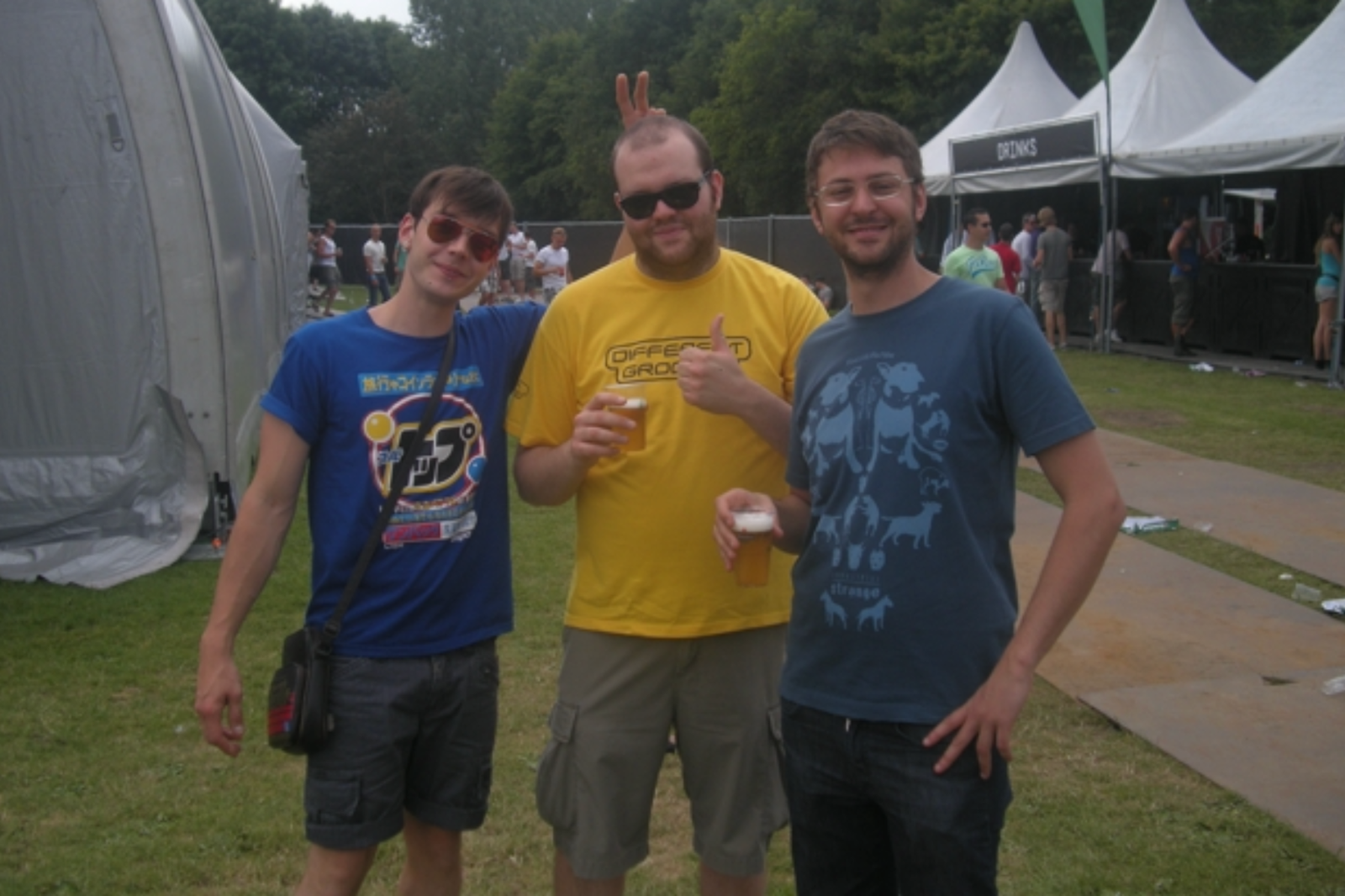
Every weekend we were living something that felt enormous – in Trieste, across the border in Slovenia, in Croatia, sometimes travelling much further into Europe – and we just could not let all of it evaporate by Monday morning. We wanted to tell the stories. We wanted to share those moments, and the sensations we were experiencing weekend after weekend, with our friends first and then with every other clubber who had been in the room with us. That was really the entire concept. There was no business plan. There was an urge.
There were already a few party portals in Slovenia and Croatia doing something like that – pictures, party reviews, the weekend handed back to the people who’d lived it – and at first we simply wanted to be one of those, for our side of the border.
What we couldn’t have predicted is how quickly having a platform forces you to develop a point of view. Once you start publishing what you love, you start noticing what’s missing, and once you notice what’s missing you start wanting to programme it yourself. For our first fully independent party we booked Silicone Soul at Euforia, a club in Duino that doesn’t exist anymore.
Watching a night happen because we had decided it should happen, changed something in us permanently.
Did you feel there were any obvious gaps or things missing in the electronic music media landscape at the time of establishing the website?
Gabriele Gilleri: Absolutely. Back in 2005, there was a massive missing middle ground in the electronic music media landscape. You had the huge, traditional print magazines (which were quite expensive at the time) that were heavily biased towards mainstream and commercial sounds, and then you had the “party portals” of the era, which were mostly focused on photo galleries and casual party reviews. While we actively participated in that club culture, we immediately felt the need for a major pivot toward a more professional, journalism-driven digital magazine dedicated strictly to the underground scene.
We wanted to create a space that satisfied those deeper underground appetites without being elitist. From day one, our strength was our agility and openness to market innovation. We didn’t look down from an ivory tower; we constantly evolved based on the direct feedback, advice, and suggestions of our community and readers. We gave them a professional platform that finally treated underground electronic music with the editorial respect it deserved.
Michele Del Bono: Absolutely – while Slovenia and Croatia had their ‘portals’, Italy, and especially the north-east where we were living, had nothing comparable. So the first gap was geographic and almost absurd – we were surrounded by a scene that had no mirror on our side of the border.
The second gap was aesthetic, and it mattered enormously to us. We wanted the thing to be beautiful and easy to use. That sounds obvious now. Back then it really wasn’t.
The third was participation, and it’s the one I find most interesting to look back on. We gave people the freedom to comment underneath party pictures – way before Facebook! In its small way it was an innovation, and it brought us a huge amount of traffic. It also brought a huge amount of nastiness: insults, people taking the piss out of each other, the whole thing curdling in front of us. There was no way to moderate it one comment at a time, so we shut it down. We had accidentally built a piece of social media before anyone had understood what social media does to people, and we weren’t equipped for what it became.
Then there’s the programming gap, which is the one that still stings. Nobody was bridging international artists into the clubs and venues here. We wanted to showcase the artists we were passionate about, in our own city, and to launch a kind of musical programming that simply didn’t exist. It wasn’t easy – it was brutally hard – and honestly, it’s still missing in Trieste as we speak.
And finally, infrastructure. We built an advertising and communication platform for the whole regional and cross-border scene: digital, printed, mailing list, even SMS. It sounds almost quaint today, but at the time it was genuinely new, and it’s what put us in the room with clubs and festivals all around us.
What were the first types of content published, and how did you begin to populate the website, and differentiate from other electronic music publications?
Gabriele Gilleri: We started from the grassroots, focusing on party reviews and photo galleries. Since smartphones didn’t exist back then, we would go to as many events as possible armed with rudimentary digital cameras. Our main goal was just to get our name out there; we would hit the dancefloor distributing Different Grooves stickers, business cards, and custom gadgets, constantly reminding clubbers that we were part of the scene and building an organic community face-to-face.
As we grew older, the website matured with us. We gradually shifted our focus toward the industry itself, introducing record reviews, artist interviews, hardware and technical equipment testing, and eventually pioneering our own podcast series. What truly differentiated us was this evolution from a street-level clubber community into a comprehensive, highly credible technical magazine that covered both the lifestyle and the professional industry behind electronic music.
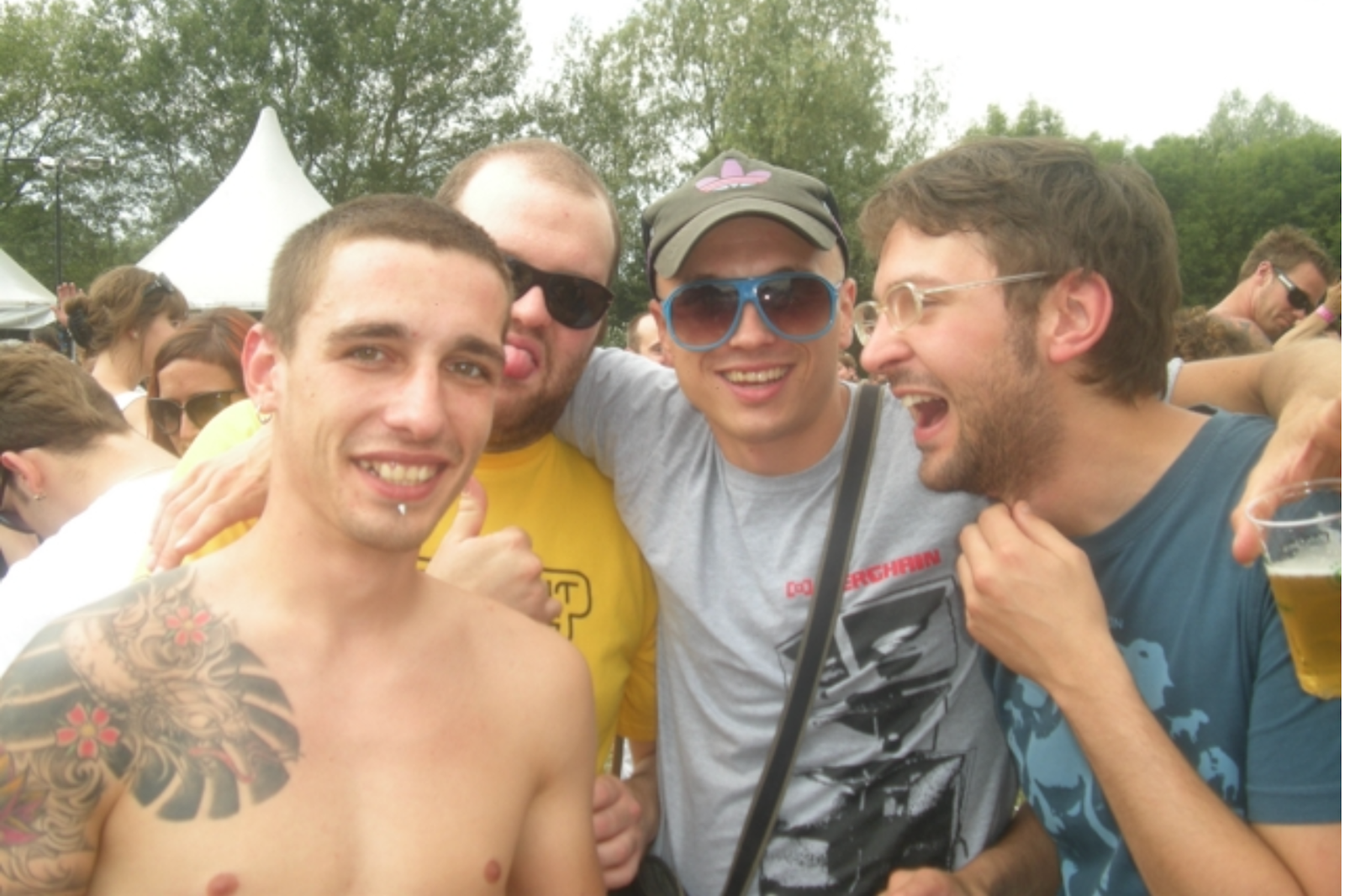
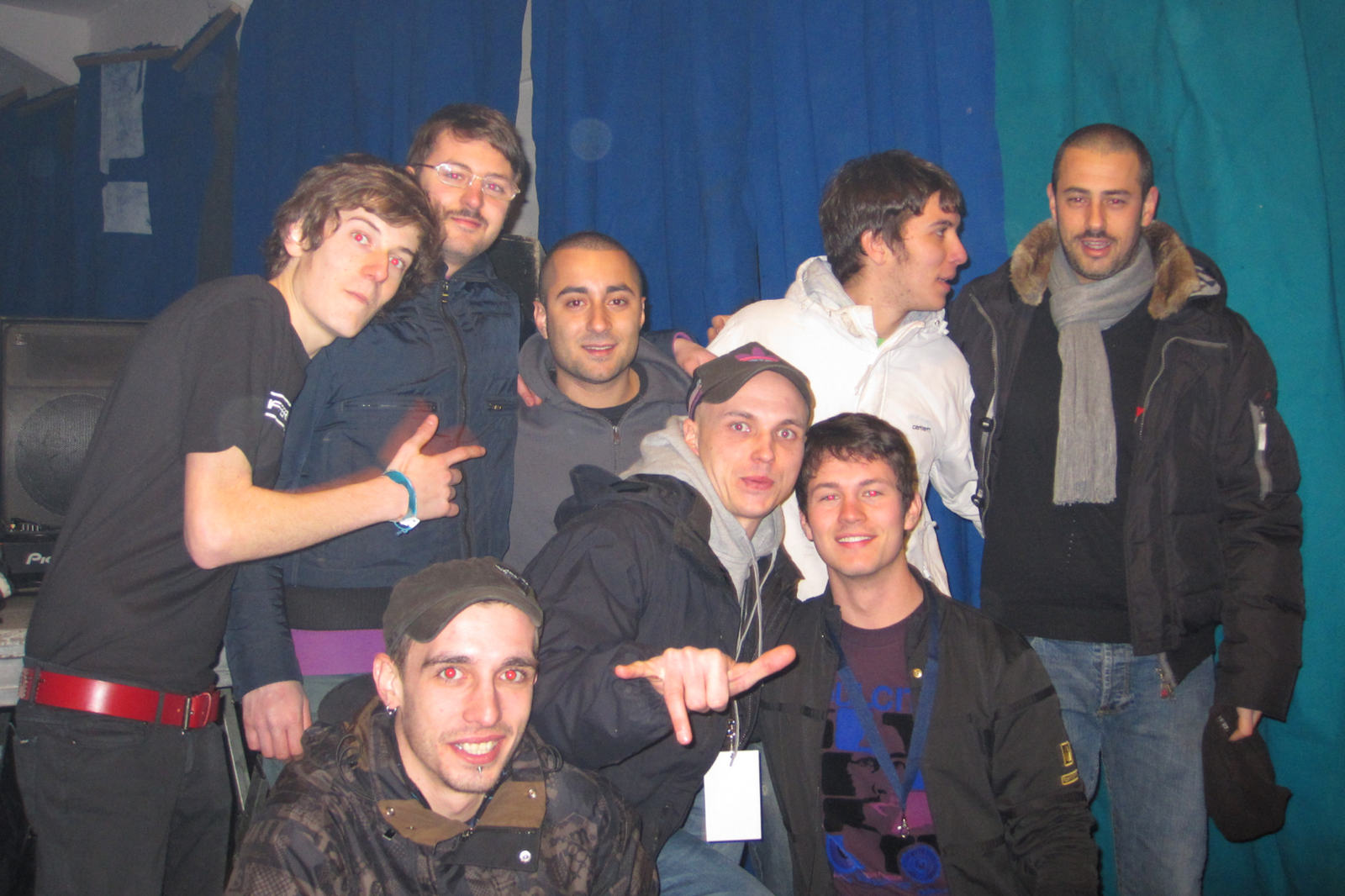
Michele Del Bono: The pictures carried everything. Early adopters of digital cameras, we went clubbing with those magical machines – and those party galleries were the reason people came back to the site on Monday morning. They came to find themselves in them.
Around the images came the words: the party reviews, our attempts to tell people how the nights and the festivals we were going to had actually felt from the inside. And here’s the part that still makes me happy inside – our close friends wanted in. They started writing too. That’s the moment Different Grooves stopped being two guys with a website and became something with a crew around it, which is what it remained for twenty years.
The thing I’m proudest of, though, is some of the design aspects. I cared about it obsessively, maybe too much. We had put in energy and money we didn’t have to compensate for skills I was perhaps lacking, making beautiful artworks, digital and printed, for the site and for the parties. I was decent with Photoshop and I spent a frankly unreasonable amount of my youth inside it.
Then, as we grew up, credibility arrived – slowly, mostly because we kept showing up – and with it the right to be taken seriously enough to start reviewing records, releases, artists, the industry itself. But, possibly, none of that would have existed without the photographs of our friends raving uncontrollably.
Different Grooves’ mix series evolved into a platform which hosted numerous key names from over the years such as Dave Angel, Simon Dunmore, Dave Clarke, Nic Fanciulli and many more. Can you tell us about some of your favourite Different Grooves mixes, and the process of growing this part of the website?
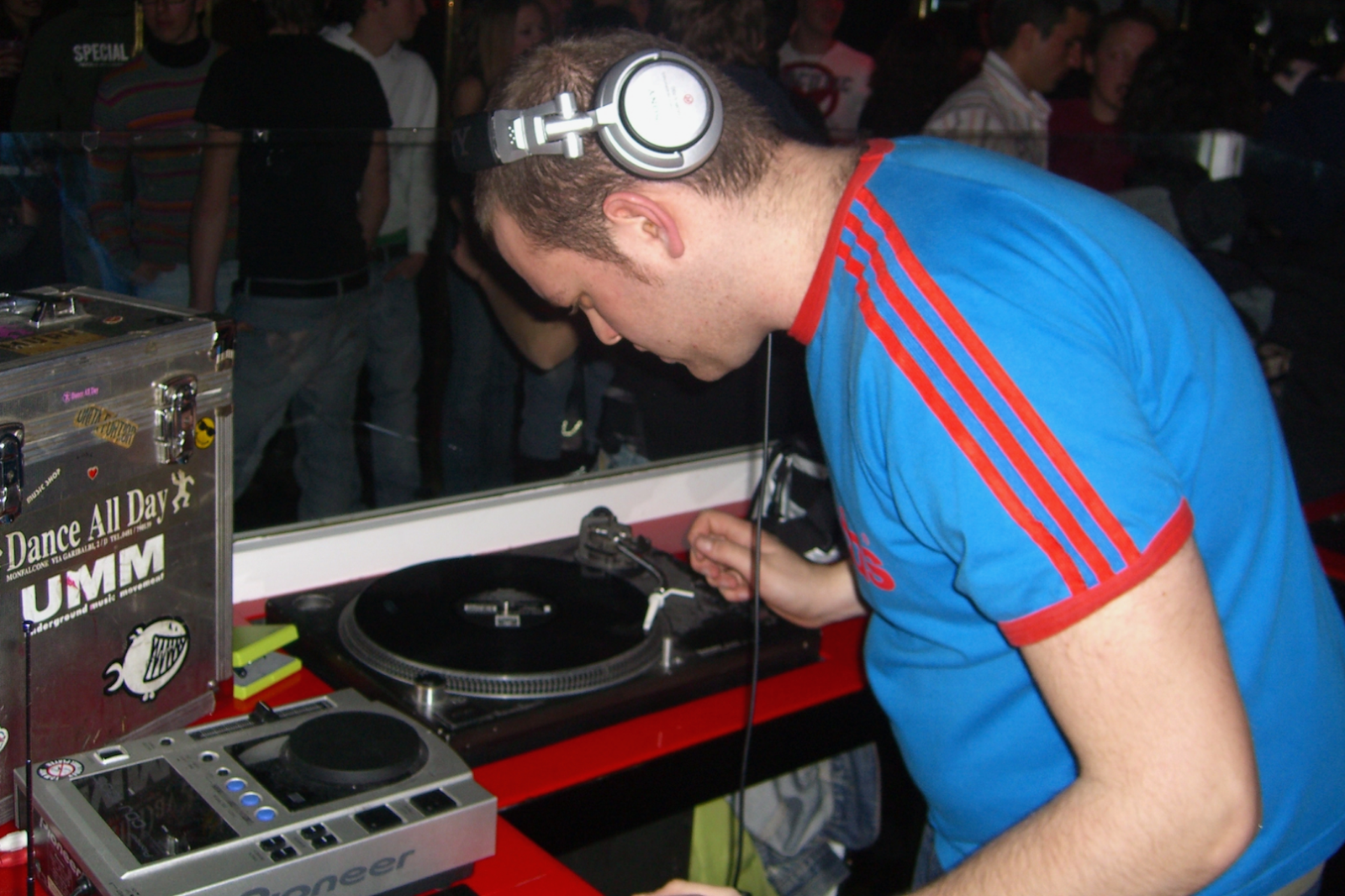
Gabriele Gilleri: Today, launching a podcast or a videocast is as simple as clicking a button, but back then, we were among the absolute first independent magazines to offer a structured mix series. The technical development behind it was incredibly challenging. I vividly remember setting alarms for 5:00 AM just to manage the audio editing for the upcoming weeks, desperately trying to balance this passion with my personal and professional life. There were no automation tools, platform aggregators, or AI to help us—I was literally writing the RSS and XML feed files by hand, line by line, to ensure the podcasts could actually stream correctly.
It’s hard to pick just one favorite mix because each represented a massive milestone, but hosting legends like Dave Clarke, who embodied pure techno, or the sheer class of Simon Dunmore representing house music, felt surreal given where we started. Growing this section was a PR effort entirely based on building credibility. In the early days, we were pitching to artists; but after a few years, thanks to the reputation of our archive (which grew to over 200 broadcasts), major agencies and management teams were actively pitching their top-tier acts to host a guest mix on our platform. “Different Grooves On Air” became a genuine stamp of approval in the industry.
Michele Del Bono: I want to be honest here, because the honest answer is the more interesting one. The mix series became what it became after my time. That is Gabriele’s work – the technical side, the stubbornness, the relationships he built with agencies and managements over the years. Seeing those names sitting in the Different Grooves archive today is a strange and wonderful feeling from where I stand, and the credit belongs to him.
So my favourite mixes aren’t really DG podcasts at all. They’re Gabriele’s own mixtapes, the ones he recorded mostly in his bedroom, full of the records we were living on between 2005 and 2010. Nobody pitched those. No PR sent them over. They are simply a document of what two folks, completely in love with this music, believed was the greatest sound in the world. Sometimes I still listen to them, and they take me straight back to that room.
What platforms or tools were used to manage and publish content in the first five years, and how did your workflow change as the site scaled?
Gabriele Gilleri: We started out using Joomla, which was the go-to open-source CMS back in 2005. However, as the web evolved, the rise of WordPress made a migration absolutely necessary. I still remember the sheer technical difficulties and the heavy financial costs involved in making that initial jump. Once we settled on WordPress, we went through four complete redesigns and versions of the website. At first, we relied on external marketing agencies for the layout, but over time, we learned to manage the entire infrastructure independently.
On the content side, the workflow quickly became overwhelming. We were dealing with a massive influx of music promos—at one point, we were signing up for every promo pool we could find, sometimes even sneaking our way into highly exclusive networks! The volume of tracks and reviews to manage was insane. When the time came to prepare for the platform’s transition, I made sure to personally back up our entire historical archive. It amounted to nearly 70 gigabytes of clean data—and that is completely excluding the actual audio files of the podcasts. It’s a literal library of modern electronic music history.
Michele Del Bono: There’s one moment I’ll never forget, and it explains almost everything about how Different Grooves got built.
We were sitting at a bar table, me and Gabriele and a local website developer, and he passed us a quote for the site. It cost roughly as much as a small car. We didn’t even have the legal age to drive. I remember sitting there completely speechless, genuinely shocked – thinking, well, that’s where the dream ends.
Instead we decided to learn it ourselves. With a lot of sweat and a lot of sacrifice we taught ourselves Joomla, which was the standard back then, and the first version of Different Grooves was born mostly out of our own hands. I don’t think I understood at the time what that decision was doing to us. It taught us, permanently, that if we couldn’t afford something we would simply become the people who could make it. I think I’ve relied on that instinct for the rest of my working life.
I lived inside Photoshop for the visual side – web elements, the artworks, the flyers, all of it. Gabriele went much deeper into content management and the infrastructure as the years went on, so that chapter is genuinely more his to tell than mine.
As Different Grooves evolved, what were some of the main challenges you faced as the platform grew, and how did you overcome them?
Gabriele Gilleri: The absolute biggest challenge was time—or rather, the total lack of it. As my corporate career in the insurance industry demanded more and more of my focus during the day, and with my commitment to staying fit through sports, the time for Different Grooves had to be brutally stolen from nights and weekends. For years, my routine meant very few hours of sleep and plenty of dark circles under my eyes.
As the platform scaled, we tried to expand our core editorial team, which was no easy task in a volunteer-driven underground scene. I owe an immense debt of gratitude to the core crew who kept the engine running: Mitja (Michele’s brother), Michele himself, Michele C., Matthias, Marco, and especially Matteo, who was truly the “last of the Mohicans” supporting the website until the very end.
Parallel to the magazine, our events required an entirely different level of logistical support. Our street-level crew was irreplaceable, and I want to personally thank Tommy, Lion, Chris, Ted, Miki, Alice just to name a few, who stood by our side managing everything from the bars to PR. Financially speaking, “sustainability” was a word we barely knew back then. If I look at the balance sheet today, the financial costs heavily outweighed the revenues. But money was never the driver. Our engine was pure passion and a deep desire to build a borderless cultural brand. We chose identity and positioning over profit, and that is why the legacy survived for twenty years.
Michele Del Bono: The biggest challenge in the long run, was probably making any money out of it. The parties often didn’t work financially, and the whole project was a beautiful struggle running on passion, because there was nothing else in the tank.
And then there was Trieste itself. We wanted to be an international player. We genuinely aimed at that, we weren’t modest about it – and we were trying to do it from a city whose scene has always struggled. That distance between our ambition and our postcode was, and probably still is, the hardest thing of all.
A tipping point was probably when we managed to book Dave Clarke in Trieste. For a few weeks we were on everybody’s lips: a guest of that stature had never been brought to this city, and it felt like the thing we’d been building toward for years was finally about to land. And then he never arrived. To this day I don’t have a clean answer for what happened. Looking back, I think that was the beginning of a downward curve for us, and it was very difficult to manage. When you’ve spent years telling a small city that you can compete with the big ones, a night that doesn’t happen costs a great deal more than money.
But when I look back at the whole of it, that isn’t what stays with me. What is – and I’m genuinely moved thinking about it – is the sheer amount of affection and time our friends and collaborators gave to this project. They sat through frequent, endless midweek meetings. They gave up entire afternoons building venues and bar counters out of nothing. They stayed with us from the night into the morning, party after party, year after year.. They did it because they believed in what we were doing and in some cases, honestly, more than I believed in it myself. Many of them became friends for life, and that means something. If I’m being truthful, that is the real product of Different Grooves. Not the website.
Let me just say thank you to my family, who carried more of this than they ever let on. Federica, who was beside me across a challenging time with an enthusiasm for what we were doing that I sometimes struggled to match. And every single person who stood close to us and gave this thing their belief.
The hours were always stolen. First from school, then from university, then from work. But we were young and we could afford it. I’m glad we spent them the way we did.
Can you recall any specific features or interviews on the website which were instrumental in increasing readership?
Gabriele Gilleri: This is a tough question because, even on this front, we operated much more like artists than a corporate business. We rarely analyzed web traffic analytics until the final years. To give you an idea of our mindset, our Google Ads revenue is probably still sitting untouched in some Silicon Valley vault—monetizing clicks was never our priority.
However, two main things drastically boosted our readership and industry footprint. First was our strict, value-driven review policy for music promos. We introduced a rewarding system: if a label or artist sent us a physical copy of their record, we guaranteed a deeply detailed, high-exposure review. It allowed us to act as a proper editorial filter, giving space to all good music but championing those who truly wanted to invest in our voice.
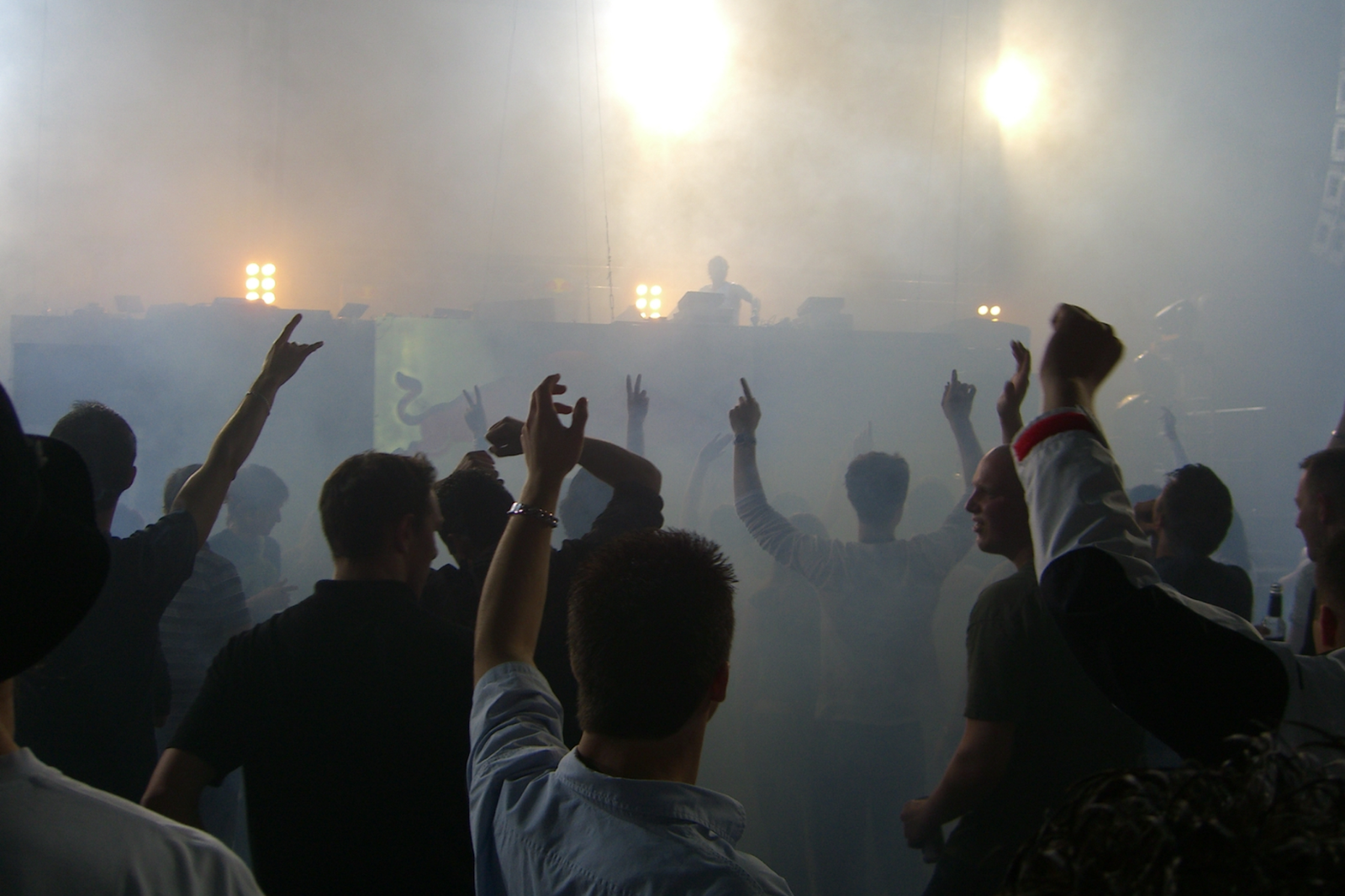
Content-wise, our coverage of the 10th anniversary of Awakenings in Amsterdam was arguably one of our most-clicked features. Different Grooves was experiencing a massive expansion at the time, both as a magazine and an event promoter. We traveled to Amsterdam as a massive crew, and that festival truly felt like home. The synergy was incredible—we spent the weekend balancing intense connections with the crowd and spending extensive time in the backstage with heavyweights like Ben Sims. That feature captured the raw energy of the scene, and our readers absolutely loved it.
Michele Del Bono: The two things that genuinely moved the numbers in the early days were the ones I’ve mentioned: opening up the comments under the party pictures, and the party reviews themselves. That combination – come and find yourself, then come and argue about it – was the engine, for better and for worse.
The content I’m personally most attached to is probably our coverage of the raves at the Gasometer in Vienna. For our crowd, Vienna felt exotic, slightly out of reach, a step up from what we had. Our readers responded to that in a way they never did to anything purely local, and I think I understand why now: they didn’t only want to know what had happened in that magical space. They wanted evidence about that energy, and they started coming with us.
How did Different Grooves adapt its content strategy in response to the rise of social media and changes in how audiences discovered and consumed media music?
Gabriele Gilleri: With the benefit of hindsight, we made some strategic mistakes when it came to social media. We always treated our website as the absolute center of gravity, whereas we probably should have adapted sooner by creating platform-specific, native content for each channel. However, managing custom content strategies for multiple platforms was simply too complex for a project that we were running alongside our primary corporate careers.
That being said, the early social media era—particularly Facebook—brought us massive benefits and helped scale our community. But as newer platforms emerged and our focus naturally shifted due to professional life, we couldn’t find the right chemistry to ride the next wave of social media trends. And honestly, even if I might sound like a grumpy old-schooler, I am completely fine with that. Electronic music and digital media move at a relentless pace, and perhaps our specific era had simply run its course. We chose to remain true to our identity as a long-form technical magazine rather than chasing the algorithm.
Michele Del Bono: The truth is that we simply weren’t ready for it. We never really treated social media as a serious resource: the website was our centre of gravity, and everything else looked like a distraction from the real thing.
I don’t think that was arrogance, though. It was arithmetic. Social media arrived at precisely the moment when both of us were trying to become productive adults – studying first, then building careers – and it demanded a daily attention, a dedication of time and resources, that we probably simply did not have left to give.
Would we have grown faster if we’d understood it? Almost certainly. But looking at where things stand today, I’m honestly quite happy with it. The things happening outside the algorithm now feel like the most alive things in this culture – closer to real communities, like-minded people who actually know each other. There’s something quietly satisfying in that. Maybe we were never going to be a social media project. Maybe we were always going to be a website, a room, and a group of friends.
Which artist interviews on Different Grooves are you most proud of, and what made those conversations particularly memorable or significant?
Gabriele Gilleri: We didn’t just limit ourselves to one format; we truly covered the entire spectrum of digital journalism. We went from traditional, cold text interviews sent via Word documents to being early pioneers of video interviews conducted over Skype long before it became a standard industry practice.
When it comes to memorable moments, it was often about what happened behind the scenes. We did a massive amount of field journalism right in the middle of smoky backstages and loud festivals. Let’s just say that on more than one occasion, those late-night conversations required a bit of “outside help”—or some serious editing the next day—to make sense of them given the chaotic environment! In fact, there were times when we listened back to a recording and realized it was better to scrap it and rebuild the entire piece from scratch. In total coordination with the artists’ PR managers, we’d redo the interview once everyone had a clear mind and a fresh perspective. That hands-on, protective approach toward the content and the artists is exactly what allowed us to build such deep, long-lasting trust within the industry.
Michele Del Bono: That was mostly Gabriele’s realm, and he was very good at it, so I’d rather let him tell that story properly.
My memories of those nights are of a different kind. While he was setting up for recording in the backstage somewhere, I was most likely soaking up the energy, watching the dancefloor, making the most out of that party moment.
What were the most important considerations in keeping Different Grooves running and engaging over the long-term?
Gabriele Gilleri: As you probably gathered from our previous answers, we never treated Different Grooves as a corporate business. Actually, let me correct myself: we did try to make that jump into becoming a proper company at one point, but that transition became a major source of internal conflict and ultimately caused our paths to split. That was the moment I personally realized I had made a mistake. My entrepreneurial ambition was fighting against my pure passion for the music, and the reality is that those two forces rarely coexist easily.
Worse, the financial pressures, the endless hours, and the heavy energy drain were beginning to strain my relationship with Michele, and our peace of mind was slipping away. The smartest decision we ever made was to take a step back. We went “back to the roots,” refocusing entirely on the music and on what we, as deep connoisseurs of the underground, could genuinely contribute to the scene.
Passion—pure, uncompromising passion—is the only reason this project survived for 20 years. If there is one true regret that both Michele and I share, it’s that we didn’t celebrate our 20th anniversary in 2025. Ten years earlier, back in 2015, we did our 10th anniversary properly in our hometown of Trieste: four days of incredible events featuring international heavyweights like Radio Slave alongside all the local DJs who had supported us over the decade. We missed that final victory lap in 2025, but the legacy of what we built remains entirely intact.
Michele Del Bono: We were just party kids with big hopes and a lot of ambition. I can only speak for myself, but at the beginning we had absolutely no idea what we were doing. Some things worked, most of them didn’t, and we were far too excited to tell the difference. We wanted to do everything at once: local and international, digital and physical, magazine and promoter, all of it simultaneously, with an enormous amount of love and passion, some free time and almost zero money. As you can imagine, not a great deal of strategy.
But the part that still moves me, is that generating from that strategic nonsense, electronic music, nightlife and events eventually became my professional field. I went on to work managing London venues at Oval Space and The Pickle Factory, and today I move between booking agencies, international artists, festivals, clubs and promoters as a fairly polyvalent professional. All of it came from there. Which means that when I look back at Different Grooves, I can see every single mistake we made with total clarity, because in the years since I’ve learned how it’s supposed to be done properly. And it changes nothing. Every one of those mistakes is the reason I have the life I have. I studied very little of this. I learned it in a room, badly, with my best friend, at nineteen years old, and it started to feed me ever since.
Different Grooves couldn’t have continued the way it was working when we parted in 2010, and I’ve never had a moment’s doubt that separating was the right decision. It’s exactly what allowed the project to stay alive. Gabriele, with the rest of the team, then carried it proudly for another fifteen years, and I want to say this clearly, because it matters to me: I don’t think I could have done that. He held it together. That’s his achievement.
I agree with Gabriele, and it’s a genuine shame we never celebrated twenty years as deserved. But who knows – maybe we’ll do the thirtieth properly, and make it bigger.
What does the relaunch of Different Grooves under TEA Global Media represent for the platform, and how do you reflect on its evolution from its original foundation to this point?
Gabriele Gilleri: Honestly, I still laugh when I think about how this new chapter began. The very first message I received from Matt looked so out of the blue that I genuinely thought it was a phishing email! But it quickly turned into a lightning-fast, incredibly smooth negotiation. We realized we were handing over the keys to the exact right people—a team that is perfectly equipped to relaunch this historic brand, backed by a deep cultural foundation and an endless passion for electronic music that, despite our changing life priorities, remains entirely unchanged for us.
I won’t hide the fact that when I saw the website come back online, it was deeply emotional. After the summer of 2025, when content and contributions had completely stalled, I had personally uploaded a “de profundis” placeholder page to mark the end of our era. Seeing the platform reborn after months of silence was beautiful. I immediately messaged Matt to thank him. It felt like watching someone pour fresh water and vital new life into a grand oak tree that Michele and I had planted all the way back in 2005.
Michele: When Gabriele told me that Different Grooves had been taken over after all these years, I was so, so surprised. Something we imagined more than twenty years ago, around a table with too many drinks and far too many dreams, was still alive, and now sitting with people who believe in it enough to give it another life. Honestly, even writing these answers feels slightly incredible to me.
What the relaunch represents, for me, is very simple. It means the thing was real. It wasn’t only ours, and it wasn’t only of its moment. If TEA Global Media can take that name and build something with it for a scene that looks nothing like the one we started in, then the idea was always bigger than the two of us who had it – which is probably the best thing that can happen to something you made as a teenager.
It has been a wonderful journey, so enriching and so emotional, and I’m grateful for the chance to time-travel back through all of it. Thank you. Long live Different Grooves.
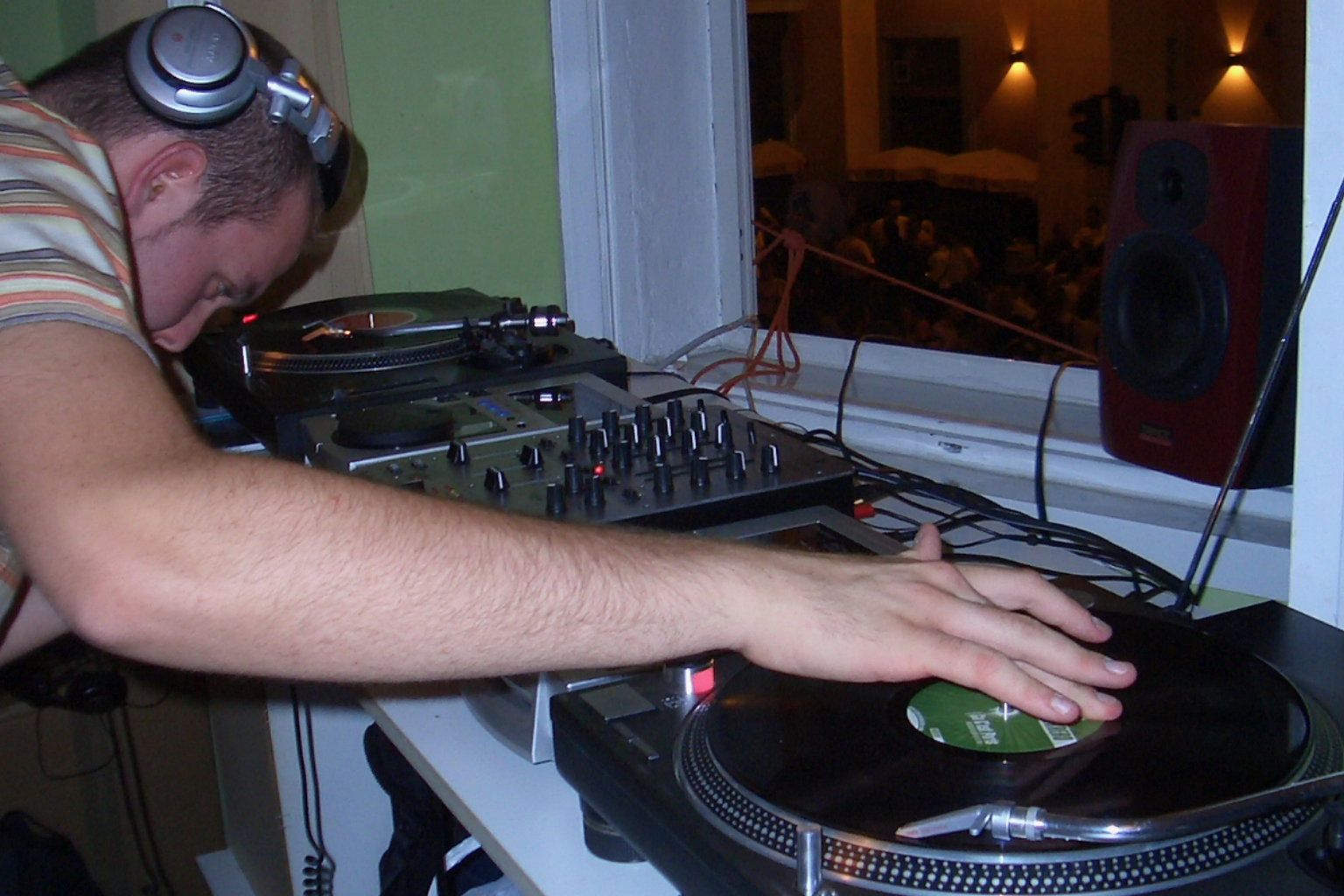
Over two decades, Different Grooves has documented the evolution of electronic music through its editorial coverage, artist interviews, reviews and acclaimed mix series, creating an archive that reflects the culture, artists and communities that have shaped the underground scene.
Looking back, the story of Different Grooves is one of independent publishing, passion and perseverance. Built by Gabriele Gilleri, Michele Del Bono and a dedicated network of contributors, artists and readers, the platform has earned its place as a respected voice within electronic music media.
While the platform now looks to the future, the legacy built by Gabriele Gilleri, Michele Del Bono and the wider Different Grooves community remains at its heart, providing a strong foundation for the next stage in the evolution of Different Grooves.