
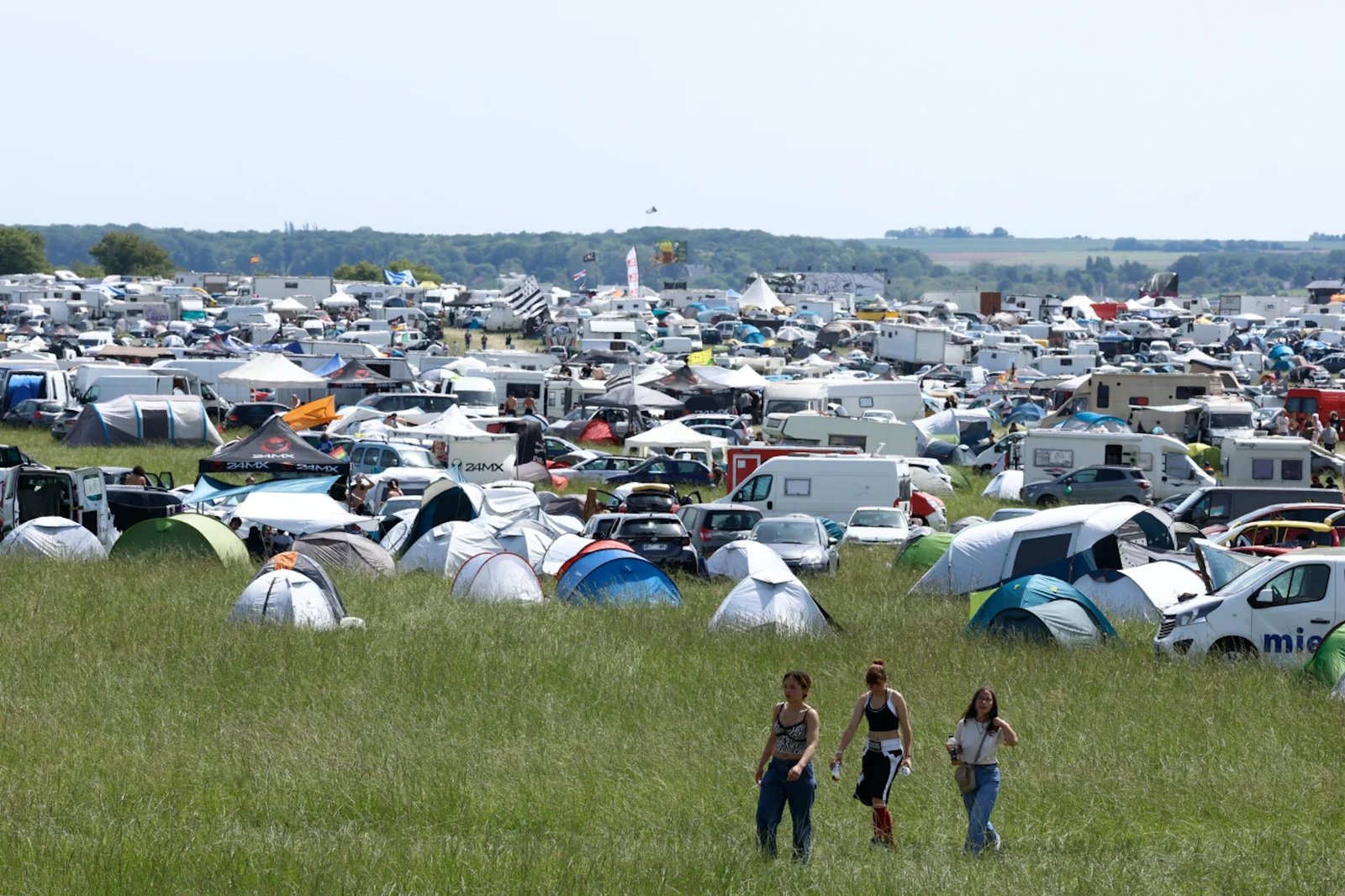
The free party law France 2025 debate just got louder, much louder. An estimated 40,000 ravers gathered at an unauthorised teknival near Bourges, occupying a former French military site in a direct act of defiance against legislation proposed by Interior Minister Laurent Nunez that would dramatically expand the state’s power to crack down on free parties. This was not a festival with sponsors and a media tent. This was a community making itself impossible to ignore.
Laurent Nunez put the rave ban proposal on the table as part of a broader public order agenda, framing free parties as a threat rather than a culture. The tekno and free party scene in France has deep roots stretching back decades, and the people who showed up to Bourges understand exactly what is at stake. Legislation of this kind does not just inconvenience organisers; it criminalises a way of life for thousands of working-class music lovers and travelling communities who have built their social world around these gatherings.
The choice of a decommissioned military site was pointed. These are spaces the state has abandoned, and the free tekno scene has long made use of such margins, physically and culturally. Forty thousand people on a disused army base is a statement about who actually inhabits forgotten land, and what they do with it when left alone.
Illegal rave legislation in France is not new, but the current proposal from Nunez represents an escalation that organisers and attendees clearly regard as a genuine threat to the scene’s survival. The Bourges Teknival, as it has been named, sits in a tradition of mass protest events that double as affirmations of community. People brought their sound systems, their vans, and their conviction that dancing together in a field is not a crime worth legislating out of existence.
For those outside the free tekno world, the instinct might be to read this as a niche dispute. It is not. The free party scene in France has historically been a space where people priced out of club culture, sceptical of commercialised festivals, or simply attached to collective autonomy have found genuine community. Restricting it does not make that need disappear; it just drives it further underground and makes it more precarious for everyone involved, from the sound system crews to the attendees who travel across the country to be there.
The French government will have to decide whether 40,000 people camped on a military site registers as a signal worth heeding, or just another enforcement problem. The free tekno scene rights movement is watching closely, and so is anyone who cares about the survival of genuinely independent music culture in Europe.