
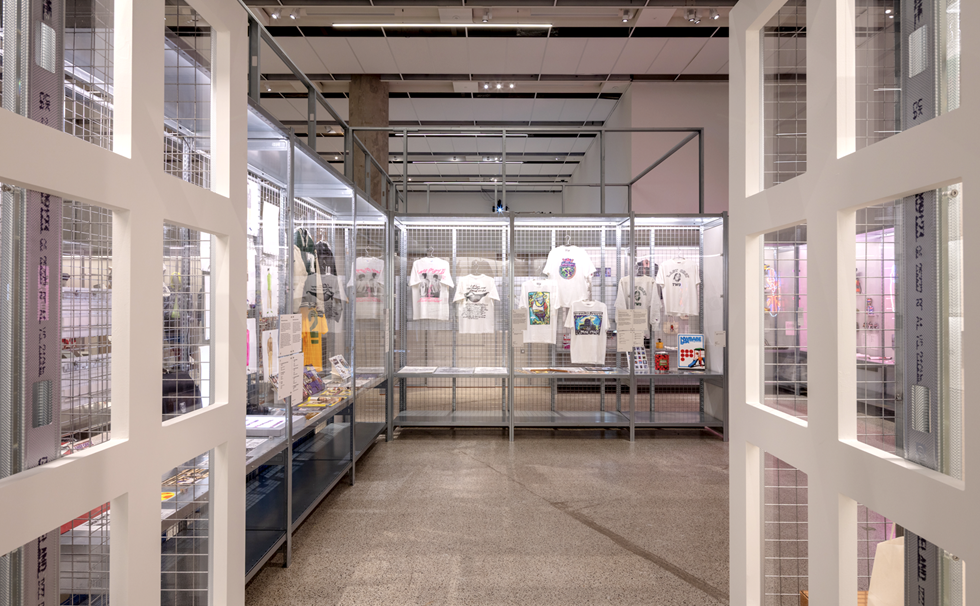
A new retrospective at London’s Design Museum places Nigo exactly where his influence has long belonged: at the centre of global culture. Running through early October, the exhibition gathers hundreds of objects to map the designer’s trajectory from Tokyo subcultures to the helm of Kenzo, where he now serves as artistic director, following in the footsteps of founder Kenzō Takada.
Rather than a straightforward timeline, the show unfolds as a layered portrait of a creative who helped collapse the boundaries between streetwear, luxury, music and collecting. With more than 700 items on display, it is one of the most comprehensive exhibitions ever staged on a figure who has often operated behind the scenes of hype.
The opening section roots everything in memory. A reconstruction of Nigo’s teenage bedroom sets the tone, pointing to a formative obsession with Americana that would later define his visual language. Vintage Levi’s, varsity jackets and mid-century ephemera trace how post-war American culture filtered into Japan and was reinterpreted through a distinctly Tokyo lens. This fascination with archive and authenticity remains a through-line in his work today, particularly visible in his later label Human Made.
From there, the exhibition moves into the early 1990s, when Nigo co-founded the cult Harajuku store Nowhere with Jun Takahashi. It was here that A Bathing Ape was born, a label that would go on to redefine how fashion is marketed and consumed. Limited releases, graphic-heavy designs and a tightly controlled sense of scarcity helped establish what is now recognised as the blueprint for modern streetwear drops.
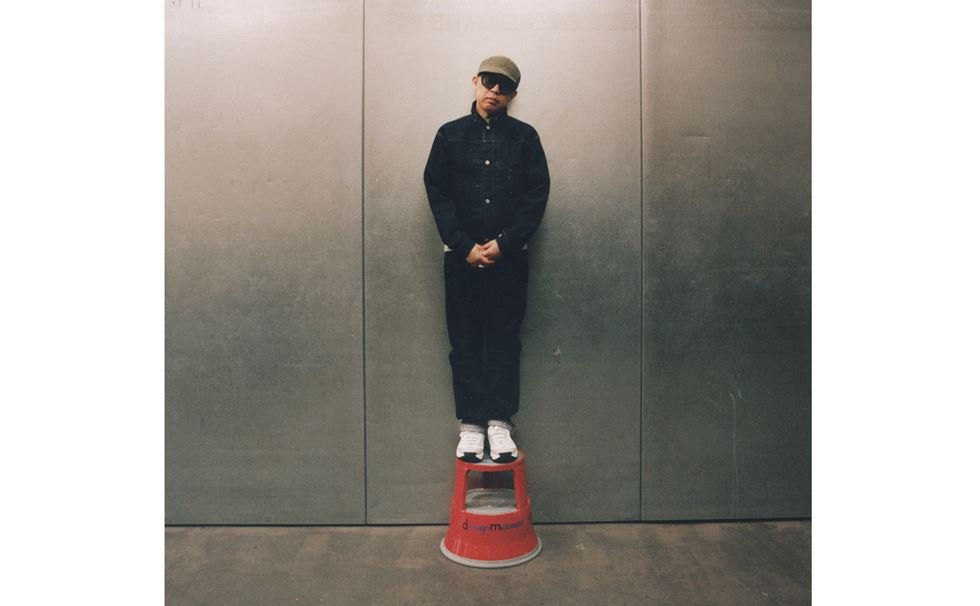
Key artefacts from this period, including early BAPE samples and the now-iconic Bapesta sneaker, underline how Nigo’s approach anticipated the resale-driven, hype-led economy that dominates fashion today. His later ventures, such as Billionaire Boys Club, co-founded with Pharrell Williams, expanded that formula globally, merging music, branding and design into a single ecosystem.
Music, in fact, threads through the entire exhibition. Nigo’s projects extend beyond clothing into record labels, production and performance, including his involvement with the group Teriyaki Boyz. This crossover is presented not as a side project but as a core part of his practice, illustrating how sound and style have long moved in tandem within his world.
The show also highlights a long list of collaborations that helped push streetwear into the luxury conversation. Partnerships with names like Louis Vuitton, Nike and Marc Jacobs demonstrate how Nigo’s visual language has travelled across industries, while still retaining its distinct identity.
More personal objects offer a quieter counterpoint. Pieces from his own archive, from signed memorabilia by mentor Hiroshi Fujiwara to handmade ceramics, reveal a collector’s mindset that underpins much of his work. That sensibility culminates in one of the exhibition’s most unexpected elements: a full-scale glass tea house, reflecting Nigo’s recent focus on traditional Japanese tea ceremony and craft.
Seen together, the exhibition makes a compelling case for Nigo not just as a designer, but as a cultural editor. His work has consistently bridged eras and geographies, blending ‘80s Tokyo, hip-hop, vintage Americana and contemporary luxury into something that feels both nostalgic and forward-looking.
In a city saturated with fashion exhibitions, From Japan With Love stands out for its scope and clarity. It does not just celebrate a career; it explains how that career helped shape the systems that define fashion today.