
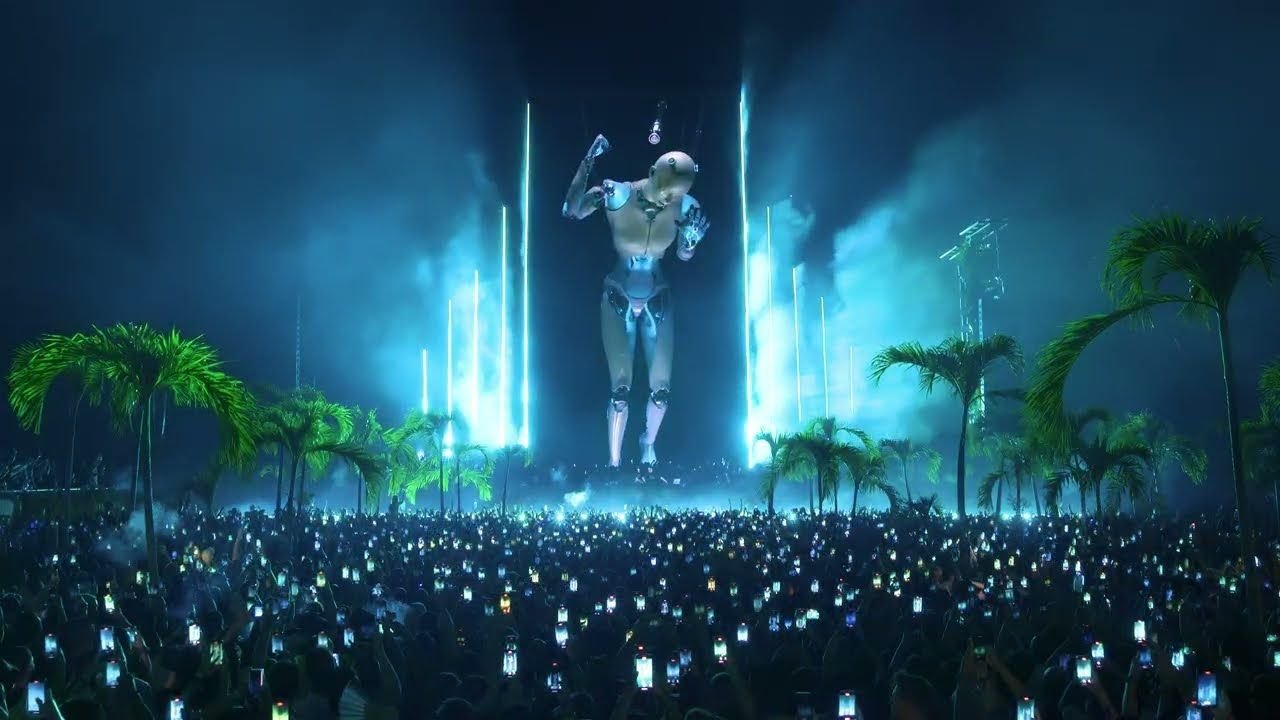
The no-phone dancefloor movement did not emerge from nowhere. It came from a slow, grinding recognition that something essential had been lost, not in the music, not in the rooms, but in the bodies inside them. In 2026, as editor Jason Heffler laid out in a recent piece for EDM.com, a cluster of converging forces has made genuine, unselfconscious dancing a surprisingly rare act. Understanding why tells you a great deal about what underground culture actually protects, and what it is still capable of protecting, if the people inside it choose to fight for it.
The most visible culprit is content culture. The moment a DJ drops a recognisable track, phones rise from pockets with what Heffler memorably describes as the coordinated speed of a military drill. Filming requires held arms, eyes fixed on a screen, and enough physical stability to capture a steady shot. That is, by definition, the opposite of dancing. You cannot do both. The DJ reads the room, but the room is reading its notifications. Berghain understood this in 2006 with its now-legendary Berghain no-photo rule, long before anyone had language for what was being protected. What Berghain codified then, the wider underground is only now beginning to reckon with seriously.
The surveillance problem runs deeper than phones you can see. Deceptive wearable tech like Ray-Ban Meta glasses means even a phone-free pocket offers no guarantee of privacy. The gnawing possibility of being filmed, clipped, captioned and posted before you have even got home has a measurable chilling effect on behaviour. Dr. Mona Amini, a DJ and board-certified psychiatrist who founded the Scottsdale-based practice Mon’Vie Mind Wellness, puts it plainly: when someone feels they may be filmed and judged later, the body shifts from spontaneity into self-monitoring. Expression gets replaced by vigilance. A space that once invited release begins to register as social evaluation. Over time, she argues, that erodes trust in one’s own impulses and makes authenticity feel like a liability rather than a release. Anonymous dancefloor culture, the kind that let people be genuinely weird and free in public, was never incidental to the music. It was the whole point.
Post-pandemic social atrophy compounds all of this. A generation that came of age on TikTok, where interaction is asynchronous and parasocial, arrived at venues with no real template for unscripted physical socialising. The pandemic stole the practice reps. Anxiety without rehearsal has nowhere to go except inward, and inward is exactly where dancing cannot reach you.
Then there is the question of safety, particularly for women. Research published in the Archives of Sexual Behavior, the official publication of the International Academy of Sex Research, found that over 56% of women reported experiencing nightlife-related sexual harm, with incidents most frequently occurring on the dancefloor. A separate 2017 YouGov poll found that 79% of women feared sexual remarks, unwanted contact or threatening behaviour when going out. Rach Brosman, founder of Support Women DJs, a Brooklyn-based organisation advocating for gender equity in the industry, describes the specific experience of lurking: staring, standing too close, hovering in a way that feels invasive. When nearly four in five women walk onto a dancefloor already braced for something bad, letting go to the music is not an option available to them. A phone ban nightclub policy alone does not solve that. But it is worth stating clearly that the anonymous dancefloor culture the underground prizes was never equally anonymous for everyone.
The overall percentage of Americans who drink alcohol recently hit an all-time low of 54%, according to a 2025 Gallup poll. Since 2023, the decline has been steeper among women, dropping 11% compared to 5% among men. Alcohol has historically served as social lubricant on dancefloors, and as consumption falls, the ease of those spaces shifts with it. None of this is straightforwardly bad, but it adds to a picture in which the conditions for free movement are genuinely harder to assemble than they once were.
Dancefloors have survived disco demolition night in 1979, the death of Daft Punk, and the full memeification of Sandstorm. They are resilient. But resilience belongs to the people who want to be in the body, not in the caption. The no-phone dancefloor movement is one concrete, community-level answer to a structural problem. It will not fix sexual harassment or undo a generation of pandemic isolation. What it can do is hold open a small space where presence is still the price of admission, and the music has somewhere honest to land.